Pastor's Message

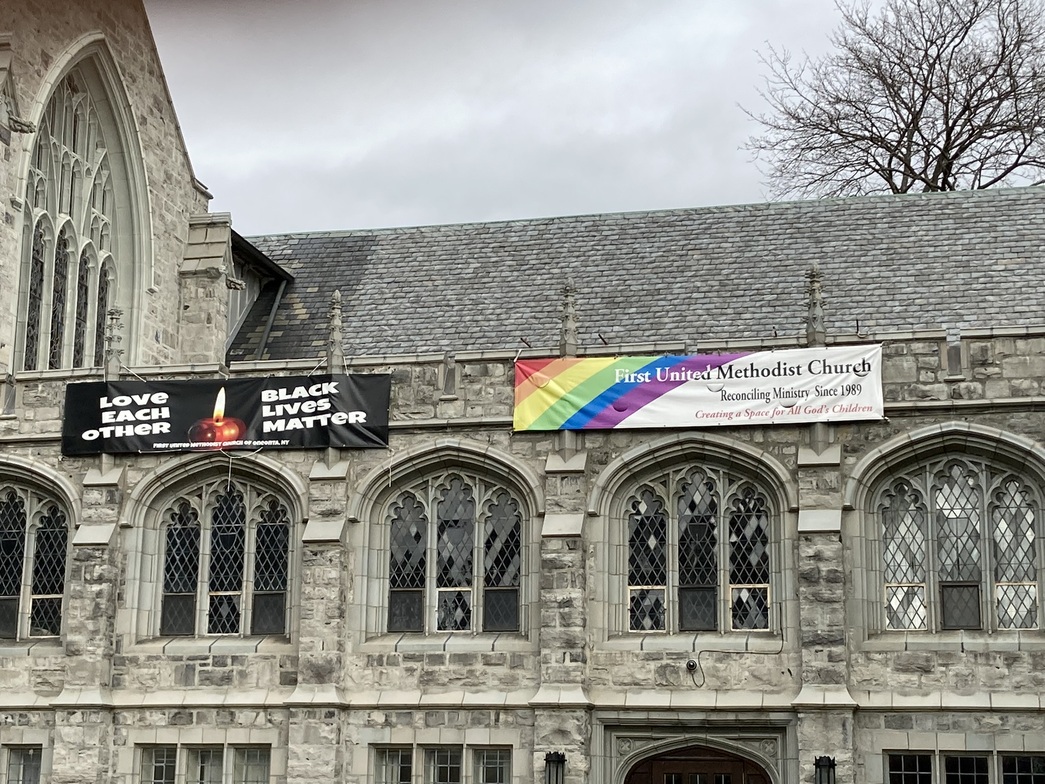
Black History Month invites us to remember. In our tradition, remembrance is never passive. We
remember to repent, to give thanks, and to renew our commitment to live differently. As people shaped
by Scripture and by grace, we remember the stories of Black women and men whose faith, courage,
creativity, and perseverance have helped bend our nation closer to justice, even when the cost was high.
These stories remind us that the struggle for dignity and freedom is not some abstract concept. It has
names and faces. It has hymns that were sung in the face of violence, sermons that were preached under
threat, children who were escorted into schools by armed guards, and ordinary people who chose love
when hatred seemed easier. Black history is not a side chapter of American history; it is central to
understanding who we are and who we are still becoming.
Yet this year Black History Month also calls us to honest reflection about the present. The injustices of
the past have not disappeared. They continue to echo in systems and practices that harm the most
vulnerable among us. As Christians, we are called not only to honor those who resisted injustice before
us, but to ask where such resistance is still needed today.
Many in our communities live with fear; fear of being detained without due process, fear of families
being separated, fear that their humanity will be reduced to paperwork or policy or even cruel
indifference. Reports of civil liberty violations by immigration enforcement agencies raise serious moral
questions for people of faith. Regardless of where we stand politically, our commitment to the gospel
requires us to care deeply about how power is used, whose voices are ignored, and whether our
neighbors are treated with the dignity and respect afforded to them as beloved children of God. Scripture
is unambiguous: God hears the cry of the oppressed, the stranger, and the one who has no advocate.
We are living in a climate of deep division. It is tempting to retreat into camps, to assume the worst of
one another, or to confuse disagreement with enmity. Division is a spiritual problem. When fear hardens
our hearts, when labels replace listening, when outrage crowds out compassion, we drift further from the
way of Christ. John Wesley reminded the early Methodists that there is “no holiness but social holiness.”
There is no authentic faith that does not shape how we live together.
Black History Month calls the church to a better witness. It invites us to tell the truth about our history,
to stand with those whose rights are threatened, and to resist the forces that dehumanize. It also calls us
to be people who build bridges, who speak with courage and humility, and who refuse to let fear have
the final word.
As we remember, may we also recommit ourselves: to justice rooted in love, to mercy shaped by
humility, and to hope grounded in God’s transforming grace. May we honor the past not only with
words, but with lives that seek freedom, dignity, and peace for all God’s children, here and now.